The USDA has put $6.9 million behind a nonprofit that’s spent the better part of a decade trying to prove something that sounds almost too simple: that the way you move cattle across a piece of land can change the land itself. Build the soil instead of stripping it. Hold water instead of losing it. And still sell beef at the end of the season.
That nonprofit is Sustainable Northwest, a Portland-based group that has become, by most accounts, the center of gravity for regenerative ranching across the West. The new money rewards ranchers for adopting a suite of practices that measurably improve rangeland health, and to understand why it matters, you have to back up and look at what this organization has actually been building.
What “regenerative” means
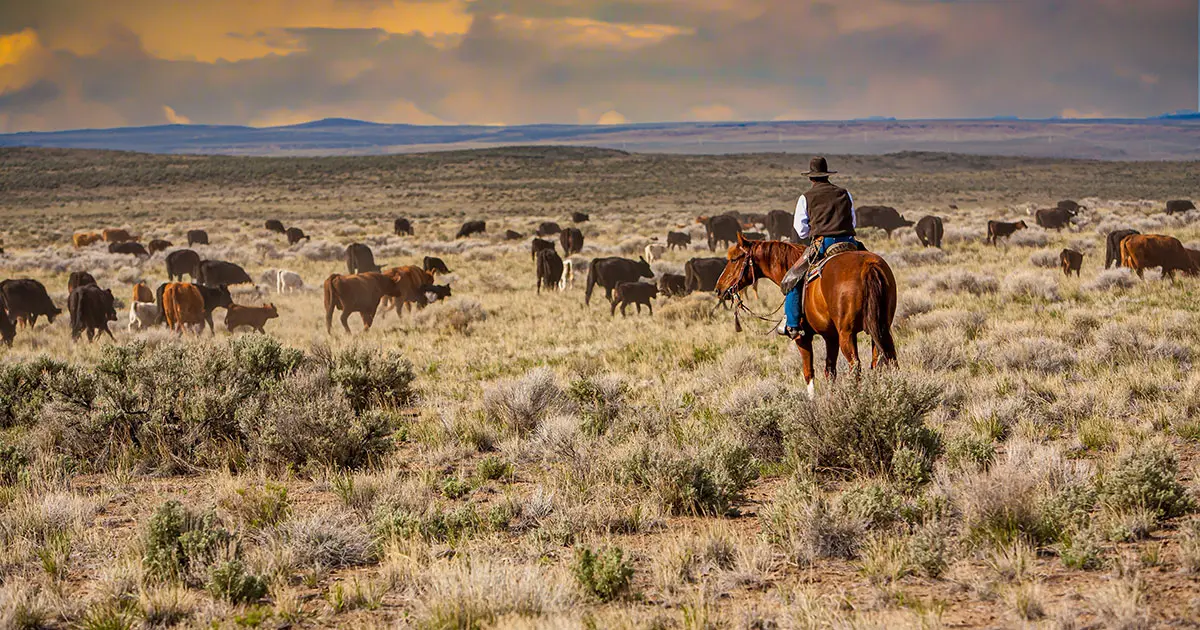
Take rotational grazing. Instead of leaving cattle on one big pasture to chew it down to the dirt, a rancher splits the land into smaller paddocks and moves the herd through them. The animals graze a section hard for a few days, then move on. The grass they left behind gets weeks, sometimes months, to recover. Roots grow deeper. Organic matter builds up. Water soaks in rather than running off.
Dallas Hall Defrees, who directs the regenerative ranching program at Sustainable Northwest, says the results show up where it counts. The soil ends up healthier, moister, and less compacted. More native plants come back. And the cattle themselves are healthier. Good for the land, in her words, and good for the cows.
The catch is that none of it happens overnight, and asking a working rancher to change how they’ve operated for thirty years is a tall order when margins are already thin.
How a small idea got big
This didn’t start with millions of dollars. Sustainable Northwest began testing regenerative practices on a handful of Oregon ranches years ago – small, careful work, the kind nobody outside the industry notices. It grew into a partnership with Country Natural Beef, the rancher-owned cooperative based in Redmond, Oregon, that’s become the largest of its kind in the western U.S.
Today the program is the largest regenerative ranching effort in the West, spanning 90 ranches across 4.5 million acres of public and private rangeland. The new $6.9 million comes through USDA’s “Advancing Markets for Producers” program. It isn’t the beginning of anything – it’s fuel for a machine that’s already running.
The part that’s harder than it sounds: proof
Here’s what separates this effort from a lot of feel-good agriculture talk. Sustainable Northwest didn’t just want ranchers to adopt these practices. They wanted to measure whether the practices actually work.
Ranchers in the program build long-term grazing management plans that get reviewed and updated every year based on what the data says. And the data is detailed: microbial content in the soil, compaction levels, native plant cover and composition, the carbon stored underground, and more, measured before, during, and after years of implementing a plan. Alongside rotational grazing, ranchers plant native perennials and use cover cropping, while the program tracks the benefits to land, water, and air.
Measurement is unglamorous and slow, and it’s exactly why the federal dollars matter. You can’t fund “we think this helps” forever. At some point you need the numbers, and numbers are expensive – soil tests, monitoring, the staff to drive out to remote rangeland and do the work ranch by ranch.
The unexpected payoff: each other
Defrees points to something that wasn’t really the headline goal but turned out to be one of the most rewarding parts of the whole thing. Ranching can be isolating. So the program built rancher-to-rancher networks – small groups that meet quarterly to compare notes, share resources, and lean on one another.
It works because of who’s doing the talking. Ranchers trust what other ranchers tell them is working, far more than they trust a pamphlet or a federal flyer. Those networks, Defrees says, are creating a culture that normalizes regenerative ranching from the inside out.
Why the timing is interesting
This grant arrives in a particular moment for regenerative agriculture. In December 2025, USDA launched a $700 million Regenerative Pilot Program, folding soil health into existing conservation programs. Regenerative ranching has landed in a rare spot: it draws support from people who care about carbon, from market-minded ranchers who want a premium for their beef, and from a federal government emphasizing soil and food quality. That’s an unusually wide coalition for anything in American agriculture.
There’s a market logic underneath it, too. DelRae Ferguson, ranching program manager at Country Natural Beef, frames the funding as recognition of work ranchers have done for generations – caring for the land, raising animals responsibly, holding up rural communities. As the co-op expands access for responsibly raised beef, she says, retailers get sustainability data and transparency they can actually stand behind. That builds long-term demand, which in turn rewards ranchers for doing right by the land.
It’s worth being honest about the open questions. Scientists still argue about exactly how much carbon grazing lands can store, and for how long. “Regenerative” has no legal definition, which makes claims hard to police. And the premium that’s supposed to reward ranchers only materializes if buyers actually pay for it – which is why the data and transparency piece matters as much as the grazing itself.
The bottom line for ranchers
Strip away the funding announcement and the policy language, and what’s left is a straightforward proposition for the people who run cattle. The program offers money, monitoring, and a network of peers wrestling with the same problems – drought, rising costs, a market squeezed by a handful of giant meatpackers.
In exchange, ranchers try practices that, if the data holds up, leave their land in better shape and their product worth more. For an industry where the soil is the whole foundation of the business, that’s not a hard pitch. The $6.9 million just makes it easier to keep proving the point, one ranch at a time.