“Cowgorithm” sounds like a concept from a startup pitch deck. In reality, it is Halter’s trademarked name for the machine-learning system behind its smart cattle collars, virtual fencing, and remote herd-management platform. Rather than being a general agricultural term, Cowgorithm refers to a specific commercial system that combines on-animal sensors, solar-powered hardware, a ranch app, and behavior models designed to train cattle to respond to directional cues. In March 2026, the idea moved further into the mainstream when Halter announced a $220 million Series E round at a $2 billion valuation, putting unusual attention on a corner of agriculture that is usually discussed in far more practical terms: labor, fencing, pasture, and animal movement.
Technology
At its simplest, Cowgorithm is the intelligence layer that makes “virtual fencing” possible. The collars use directional audio and vibration cues to guide cattle, while the broader system lets ranchers create invisible boundaries, move animals remotely, and monitor herd and pasture conditions through an app. Halter says the collars are solar-powered and ergonomic, while towers provide long-range connectivity that does not depend on mobile service. The company also describes the app as a “digital twin” of the farm, showing live data on location, health, and feed availability. In other words, Cowgorithm is not one algorithm in isolation; it is the behavioral-control and decision layer inside a larger livestock-management stack.
AI Integration
Cowgorithm is “artificial intelligence that understands animal behavior.” The company says it has collected more than 7 billion hours of animal-behavior data and that each collar sends more than 6,000 data points per minute into its cloud platform. Those figures matter because they explain the company’s pitch. The company is not just selling a collar; it is selling a data flywheel. The more animals wear the hardware, the more behavior data the system gathers, and the more refined its training and management models can become. That is the logic behind the brand name: not just connected cows, but cattle management that becomes software-driven over time.
From a Concept through Delivery
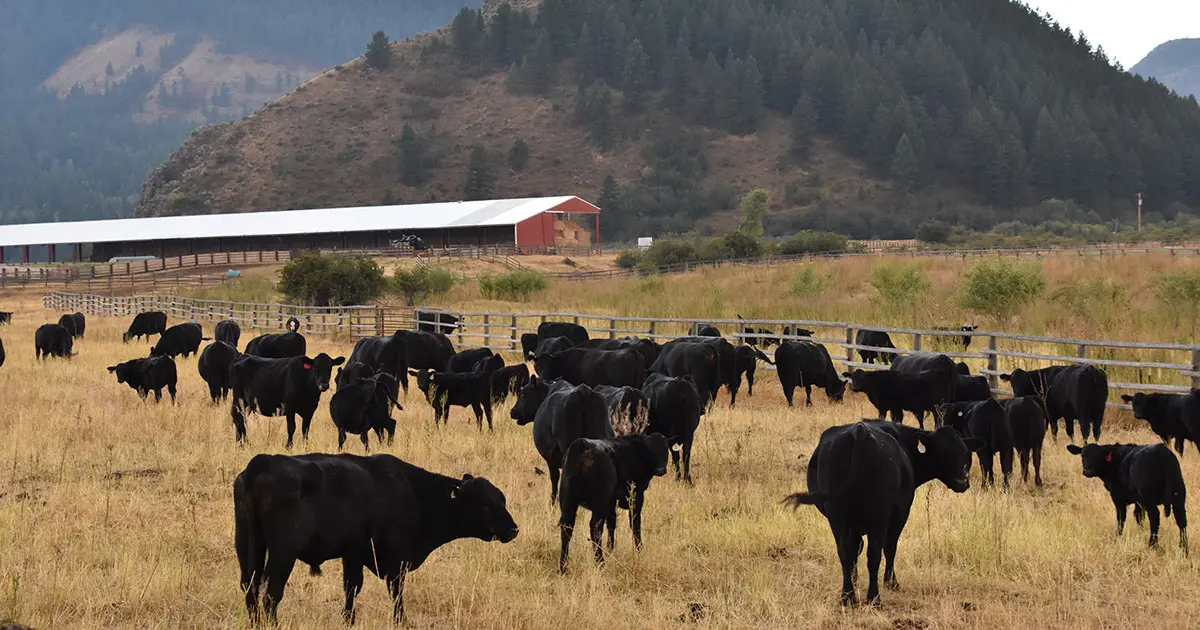
The practical promise is straightforward. Traditional fencing is expensive, rigid, and labor-intensive to maintain, especially on large or changing grazing systems. Virtual fencing replaces at least part of that physical infrastructure with GPS-linked boundaries and behavioral conditioning. In Halter’s model, ranchers can redraw boundaries, shift herds, and respond to pasture or weather conditions from a phone. Inc. reported that U.S. ranchers using this tech had already erected about 60,000 miles of virtual fencing since the company’s U.S. launch in 2024.
That helps explain why investors are excited. Agriculture is enormous, but much of livestock management still depends on people physically checking fences, moving animals, and reading pasture conditions from experience. The offer is that software can absorb some of that routine work. Inc. described the system as a combination of solar-powered collars, pasture towers, and cloud software that can move cattle with a few clicks, while Founders Fund said the company is bringing software, sensors, and AI into livestock operations “in a way that ranchers actually adopt.” This “actually adopt” point is crucial. Agtech has a long history of impressive demos that fail in messy real-world conditions. Cowgorithm has drawn attention because it appears to be solving a painfully concrete problem rather than inventing a new one.
What about the Animals
The biggest question, naturally, is animal welfare. Any system that includes behavioral conditioning and electric pulses invites scrutiny, and it should. Here the most credible evidence comes not from investor writeups or social posts, but from independent and peer-reviewed research. A recent Animal paper summary reported that cows managed with Halter’s virtual fencing and herding system adapted quickly and maintained welfare at levels comparable to conventionally managed animals. Earlier Journal of Dairy Science also described the use of sound and vibration as the primary cues, with low-energy pulses as a secondary cue. That does not end the welfare debate, but it does move it from slogans to measurable outcomes.
If the concept holds up economically and ethically, Cowgorithm may capture a real transition in agriculture from fixed infrastructure to adaptive, data-driven control. That is why the concept has attracted both venture capital and serious interest from ranchers: it promises to make one of farming’s oldest jobs more programmable without pretending the farm itself is no longer physical.