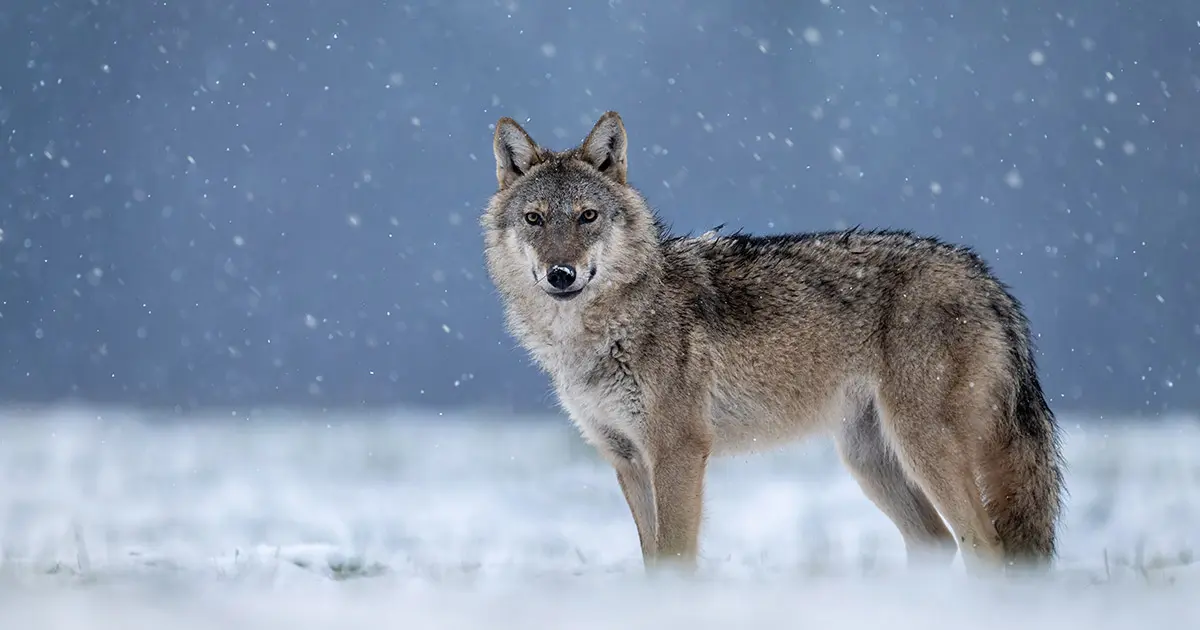
Colorado’s effort to restore gray wolves in the region was approved by voters in 2020. This initiative has been one of the most closely watched wildlife reintroduction programs in the country. As wolves return to landscapes they have not occupied in nearly a century, Colorado Parks and Wildlife (CPW) is right in the middle of the balancing act, trying to build up a stable wolf population while protecting livestock.
CPW’s outline, named the Wolf-Livestock Conflict Minimization Program Guide, is a comprehensive framework designed to reduce interactions between wolves and livestock. Think of it as a playbook for keeping wolves and livestock apart, mixing nonlethal deterrents, quick response tactics, and compensation for ranchers hit by losses.
Livestock Protection Efforts
The program’s focus is prevention as the first line of defense. Ranchers are encouraged, and sometimes required, to use measures like fladry (flagged electric fencing), range riders, carcass removal, and scare devices that use sound and light. CPW staff tailor these tools based on what they find during their site assessments, since effective conflict mitigation depends on local terrain and livestock routines.
One standout component is expanding human presence. CPW, teaming up with the Colorado Department of Agriculture, launched a statewide range rider program. The riders monitor herds, haze wolves away, and alert everyone to early signs of wolf activity in return, helping cut down on losses.
When prevention doesn’t work, the response is rapid. CPW investigates reports of wolf attacks, pays ranchers for verified losses, and may escalate management actions if conflicts become chronic. Solutions can range from more deterrence to, although rarely, lethal removal of wolves that repeatedly target livestock.
Growth and Effective Collaboration
The program has evolved rapidly since the first wolves were released in December 2023. By 2025, CPW had expanded operations, learning from early reintroduction phases. The department hired more staff, including a Wolf Damage and Conflict Minimization Manager, and added more wildlife damage specialists. The agency boosted its arsenal of deterrence gear, including around 45 miles of fladry and 160+ scare devices available for deployment.
These investments brought clear results. CPW conducted more than 240 site assessments in ranching areas, ramped up interagency training for better investigations, and built stronger partnerships with federal, state, and nonprofit agencies. Altogether, these moves marked a shift toward a more proactive, collaborative approach to handling wolf-livestock conflicts.
The Road Ahead
Still, the season hasn’t been without headaches. Finding new source populations for translocation has been complicated, as regulations and interstate agreements have become difficult, stretching efforts to secure more wolves. Meanwhile, livestock depredations, though not overwhelmingly high, have made tensions run deep among ranchers, highlighting just how vital conflict mitigation really is.
Through it all, CPW sticks to collaboration as a core principle. Agency staff work directly with ranchers to set up deterrents, fine-tune response tactics, and adapt based on real-world experience. The 2026 update put it plainly: “continue to improve this program with producers to protect both livestock and wolves.”
Striking this balance of helping ranchers and preserving wildlife is what defines Colorado’s broader wolf restoration work. The state’s management plan is explicit: sustain a healthy wolf population and keep conflicts with livestock and people to a minimum. It’s a living process, demanding constant adjustment and hands-on engagement from everyone involved.
Going forward, the success of the Wolf-Livestock Conflict Minimization Program will hinge on scaling up as the wolf population grows. As more wolves stake out territories and breed, the call for steady, well-funded conflict prevention will only get louder. Keeping those tools, teams, and partnerships in place, and never losing touch with ranchers, is essential.
In the end, Colorado’s story reveals a bigger lesson: predator restoration is as much about social acceptance as ecological achievement. Wolves might be reclaiming their ground, but their future depends on whether people learn to live alongside them. Through the evolving conflict minimization program and adaptive management, Colorado is forging its way across this complicated landscape.