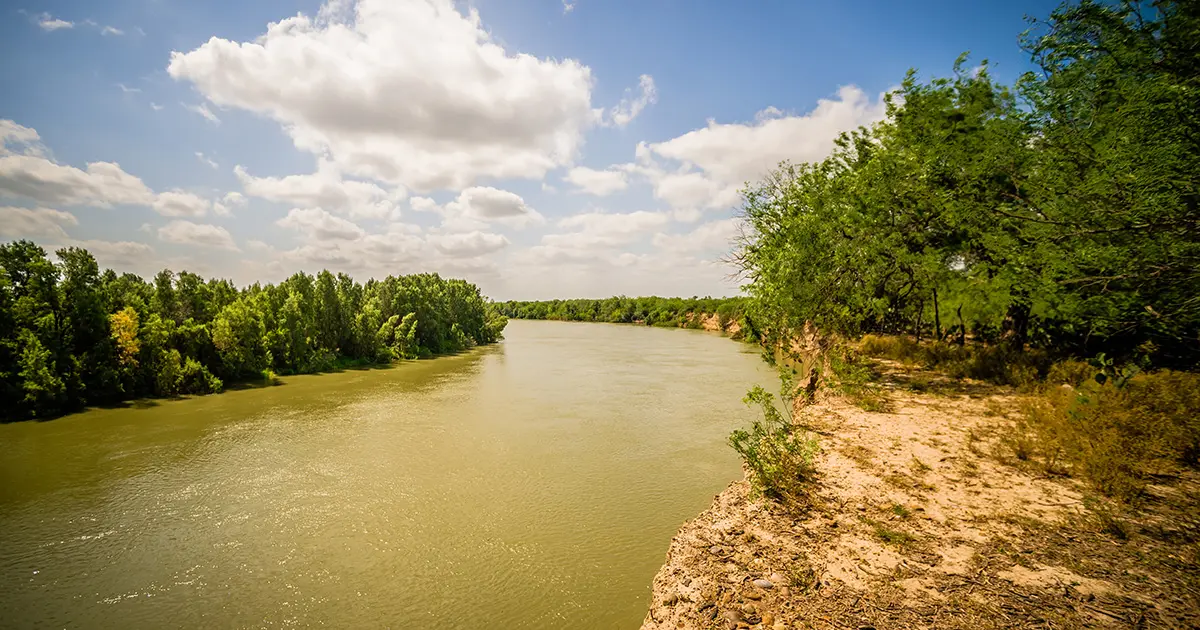
In December 2025, the governments of the United States and Mexico announced a substantive agreement to address longstanding challenges under the 1944 Treaty Relating to the Utilization of Waters of the Colorado and Tijuana Rivers and of the Rio Grande (“1944 Water Treaty”), with specific focus on Mexico’s water delivery obligations affecting farmers and ranchers in the American Southwest.
Background: The 1944 Water Treaty Framework
The 1944 Water Treaty established a binational mechanism for sharing waters of several transboundary rivers between Mexico and the United States, with operational oversight by the International Boundary and Water Commission (IBWC). Under the treaty, Mexico is obligated to deliver 1.75 million acre-feet of water to the United States from the Rio Grande over each five-year cycle, and the United States 1.5 million acre-feet to Mexico from the Colorado River. The treaty allows for accounting adjustments in times of drought, but shortfalls must be made up within the cycle.
2025 Agreement
On December 12, 2025, the United States Department of Agriculture (USDA) issued a press release confirming that the two countries had reached an understanding to meet current water obligations and address Mexico’s accumulated deficit to American farmers and ranchers. The agreement extends to the current cycle and outstanding requirements from the previous cycle.
Under the terms of this understanding:
- Mexico committed to releasing approximately 202,000 acre-feet of water to the United States, with the deliveries expected to start the week of December 15, 2025.
- Both governments recognized the importance of adhering to the 1944 Treaty’s obligations and the need for improved cooperation and timely management of transboundary water resources.
- The agreement contemplates repayment of the outstanding water deficit from the prior water cycle.
- Negotiations aimed at finalizing a comprehensive implementation plan were anticipated to conclude by January 31, 2026.
This arrangement came after sustained attention from U.S. federal and Texas state officials, who had publicly criticized Mexico’s delivery shortfalls for harming agricultural productivity and rural economies in South Texas.
Domestic and Diplomatic Context
The 2025 agreement followed months of diplomatic pressure and legislative commentary. Prior to the December understanding, several U.S. officials had urged Mexico to accelerate compliance with its treaty obligations. Texas leadership, for instance, demanded immediate action over Mexico’s failure to meet delivery timelines, citing severe impacts on farmers along the Rio Grande.
Implications for Agriculture and Ranching in Texas
For farmers and ranchers in South Texas, this agreement delivers immediate relief. Irrigated agriculture along the lower Rio Grande has historically been vulnerable to fluctuations in cross-border water deliveries, and the agreed 202,000 acre-feet represents a significant short-term improvement.
In the longer term, the ongoing challenge of water governance under conditions of climate variability and growing demand still remains a concern.
The subsequent implementation and negotiation processes will be pivotal in defining water security outcomes for communities and industries that depend on the reliable exchange of shared water resources.